Maps are nothing new. They've been crafted for thousands of years by men trying to make sense of the world we live in. Maps have been perfected for extreme accuracy, augmented to provide multi-dimensional perspectives, and have even been stylized into genuine works of art. Yet this age-old domain has resurfaced as a major battleground for such technology giants as Google, Microsoft, and Nokia.
Why have maps become so important again? Maps were never unimportant, just little innovation in this space had made maps non-glamorous. It is innovation that has given maps new life, that has made them the darling of the next frontier.
Since maps are models of the world we live in, they are the most fundamental method for tracking spacial changes - e.g. movement, construction, weather, etc. The proliferation of the mobile Internet, location-aware mobile devices (powered by GPS technology, etc.), and powerful pocket-sized computers - i.e. smartphones - has given maps a new level of importance. When combined, the old technology of traditional maps and the new technology of completely ubiquitous real-time communication creates a powerful informational force.
These new super-maps have the ability to give a rich, real-time image of the world around us. These new super-maps let us instantly find our friends, our food, our shelter. These new super-maps move humans one step closer to omnipresence.
Showing posts with label Maps. Show all posts
Showing posts with label Maps. Show all posts
Wednesday, December 2, 2009

Thursday, October 15, 2009
Map Love
I love antique maps. If I had the space in my home, I would have a room dedicated to old maps.
I love these relics of human progress for their aesthetic value - i.e. they look very cool - and I love them for what they represent. Maps are symbolic of the uniquely human need to create abstract models of the world we live in. Maps are our attempt to simplify a complex environment.
I also love how clearly maps show the progress of human evolution and understanding. A map of the U.S. in 1776 is significantly different from a map of the U.S. in 1820. These visual models offer a sobering reminder of the fact that "facts" change, that very few things are set in stone, and that being wrong is a prerequisite for progress.
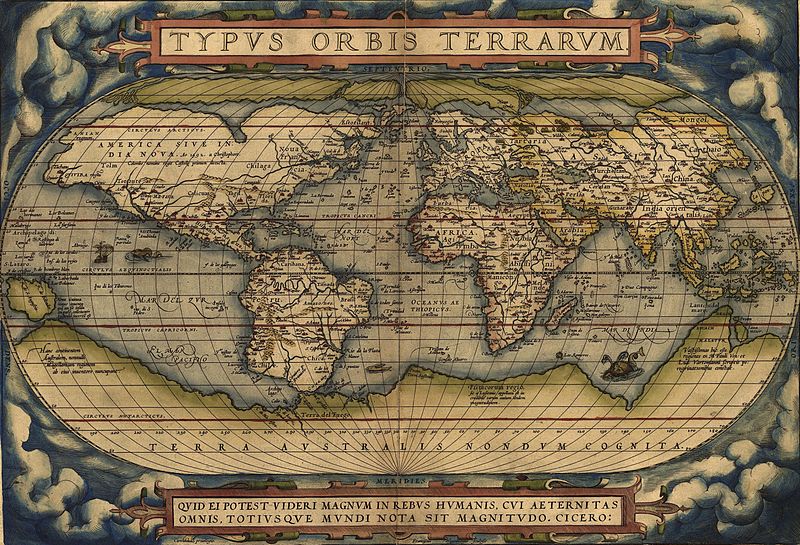
I love these relics of human progress for their aesthetic value - i.e. they look very cool - and I love them for what they represent. Maps are symbolic of the uniquely human need to create abstract models of the world we live in. Maps are our attempt to simplify a complex environment.
I also love how clearly maps show the progress of human evolution and understanding. A map of the U.S. in 1776 is significantly different from a map of the U.S. in 1820. These visual models offer a sobering reminder of the fact that "facts" change, that very few things are set in stone, and that being wrong is a prerequisite for progress.

Subscribe to:
Posts (Atom)