I'm fascinated by the power of nostalgia. This omnipresent emotion can distort and even reshape the past, present, and future. It is a comforting blanket that can be explicit or subtle.
Almost as interesting is a concept much more unusual but maybe comparably prevalent: fake nostalgia or fauxstalgia. Fauxstalgia is similar to regular nostalgia in that it fosters a sense of comfort and happiness. But what makes fauxstalgia so unusual is that it creates a strong feeling for a time or place that we never actually encountered. For example, I occasionally feel nostalgic (fauxstalgic) for the Roaring Twenties or the Atomic Age of the 1950s. I was born well after these eras.
Fauxstalgia is what turns Mad Men, Indiana Jones, and Gone With the Wind into hits. While nostalgia is a reflex, fauxstalgia comes from training - through pop culture and mass media. It is a projection of emotional perfection. Triggers of fauxstalgia are very powerful.
Showing posts with label Psychology. Show all posts
Showing posts with label Psychology. Show all posts
Monday, November 9, 2009

Tuesday, October 20, 2009
Controlled Competitiveness
I have a very competitive spirit. Sometimes I'm able to hide it and sometimes I'm not. Sometimes I'm able to control it and sometimes I'm not.
In particular, my competitive urges peak when I see a competitor making substantial progress. This competitiveness usually stirs up many different emotions - including rage, excitement, fear, jealousy, sadness, and anxiety. Without the right control, most of those emotions can be quite detrimental to my own progress and well being.
So how do I harness these powerful feelings? Usually I am able to convert my zeal into channeled ambition by taking a step back via some sort of grounding moment, through a rational approach that focuses on lessons (facts) instead of distractions (wild emotions), and by gaining perspective through direct communication with my allies. Without this control-process, I would have the fuel but not the vehicle to move forward.
Thursday, October 15, 2009
Map Love
I love antique maps. If I had the space in my home, I would have a room dedicated to old maps.
I love these relics of human progress for their aesthetic value - i.e. they look very cool - and I love them for what they represent. Maps are symbolic of the uniquely human need to create abstract models of the world we live in. Maps are our attempt to simplify a complex environment.
I also love how clearly maps show the progress of human evolution and understanding. A map of the U.S. in 1776 is significantly different from a map of the U.S. in 1820. These visual models offer a sobering reminder of the fact that "facts" change, that very few things are set in stone, and that being wrong is a prerequisite for progress.
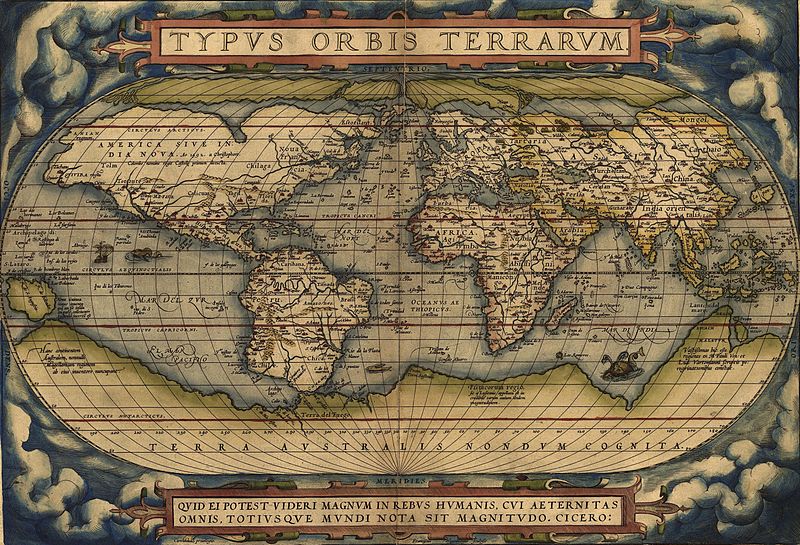
I love these relics of human progress for their aesthetic value - i.e. they look very cool - and I love them for what they represent. Maps are symbolic of the uniquely human need to create abstract models of the world we live in. Maps are our attempt to simplify a complex environment.
I also love how clearly maps show the progress of human evolution and understanding. A map of the U.S. in 1776 is significantly different from a map of the U.S. in 1820. These visual models offer a sobering reminder of the fact that "facts" change, that very few things are set in stone, and that being wrong is a prerequisite for progress.

Tuesday, October 6, 2009
Criticism vs. Feedback
Criticism is destructive. It breeds antagonism because it stems from the wrong approach - from the focus on mistakes. Criticism could be a short-term band aid but is almost always a long-term parasite. It undercuts the future.
Feedback is constructive. It stems from the partnership perspective- from the focus on expanding the pie without sugar-coating the shit. Feedback can be painful in the short-term because it is sometimes indirect and subtle. But it is almost always a long-term seed for success. It feeds the future.
Feedback is constructive. It stems from the partnership perspective- from the focus on expanding the pie without sugar-coating the shit. Feedback can be painful in the short-term because it is sometimes indirect and subtle. But it is almost always a long-term seed for success. It feeds the future.
Monday, October 5, 2009
College Camp
As I've spoken about in the past, nostalgia is an extremely powerful emotion. It can make us make questionable purchasing decisions but it can also make for some very interesting innovations. One of these innovations is the summer camp for adults.
Just like during those wonderful years of adolescence, adults can now sign up for summer camp. These camps can be based on various themes (e.g. singles-only, celebration-oriented, etc.) or can just be an alternative form of vacationing. Either way, adult summer camps are driven by nostalgia. The social dynamics developed during such adventures mimic those of our childhood and thus add a new layer of satisfcation - in addition to being away from the hustle and bustle of daily life.
I say that this concept should be expanded. If we can revisit the years of early adolescence then why not the teenage years or the early 20's? Both High School Camp and College Camp seem like the obvious extensions of this service. Who wouldn't want to go back to High School or College for a week, but this time, without the need to pass tests?
Sunday, September 13, 2009
The Sunday Night Blues
The Sunday Night Blues are ingrained into most Western World (and beyond) individuals from the early days of pre-school. This feeling of melancholy stems from the end of the weekend and the impending weight of the upcoming school/work week. It is one of the oldest constantly reappearing emotions we feel - an emotion that is nearly identical at age 6, at age 16, at age 26, at age 50, and probably all the way until retirement.
This unpleasant state begins as the sun sets on a regular (non-holiday enhanced) weekend. It fosters strange acts - i.e. giving in to bad television shows or indulging is unhealthy meals. It leads us to postpone sleep for as long as possible in order to prolong the freedom of the weekend. The emotion mutates into apprehensive submission and then finally into the eventual flow of a high-performing study/work week.
For those sufficiently crass and opportunistic, the Sunday Night Blues offer a chance to reach a different emotional state in target consumers. For instance, I suspect that vacation-themed advertisements might reach a more receptive and accepting audience on Sunday nights. But for those looking to make the world a happier place, the Sunday night timeslot offers a great chance for positive innovation and design - for the opportunity to create the solution to a major collective downer.
Subscribe to:
Posts (Atom)